OpenAI began a limited preview launch of GPT-5.6 Sol
20 November 2026 OpenAI introduced GPT-5.6 Sol and the Terra and Luna models. For now, access to the family will be granted to a limited group of partners; a wider rollout is expected in the coming weeks.
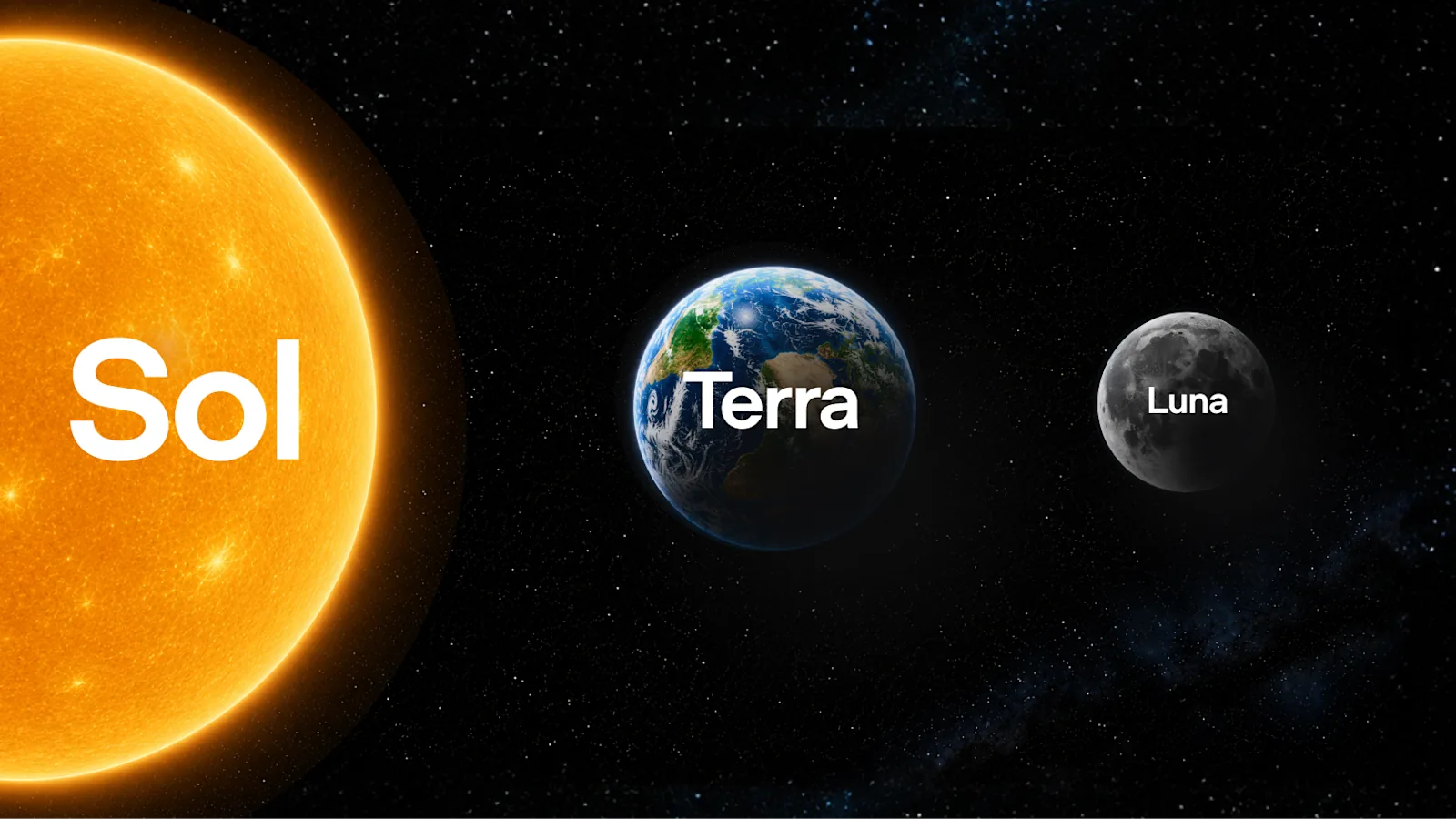
20 November 2026 OpenAI announced a preview launch of the GPT-5.6 family, which includes Sol, Terra, and Luna. Access will initially be limited to a small group of trusted partners, with broader availability planned in the coming weeks.
Three model tiers
GPT-5.6 Sol is the flagship model for tasks that require deep reasoning and multi‑step work. Terra is positioned as a balanced option for everyday tasks: OpenAI says its performance is comparable to GPT-5.5, while its cost is half as much. Luna is aimed at faster and cheaper scenarios.
For Sol, OpenAI adds a reasoning mode max, which gives the model more time for analysis, and mode ultra. The latter uses several sub‑agents to perform complex work faster. In the Microsoft Foundry catalog for GPT-5.6 Sol, a context window of up to 1 M tokens is also listed; this parameter is not mentioned in the OpenAI announcement.
Results and safety
OpenAI states that Sol achieves the best results on Terminal‑Bench 2.1 — a command‑scenario test with planning and tool use. On GeneBench v1, the model outperformed GPT-5.5 in genomics and quantitative biology tasks, using fewer tokens.
In its cyber‑capabilities assessment, the company reports a competitive result for Sol on ExploitBench compared to Mythos Preview while using roughly a third of the output tokens. In Chromium and Firefox checks, the model found bugs and individual components needed for exploitation, but under test conditions it did not autonomously create a full attack chain. According to OpenAI, the model does not meet the Cyber Critical threshold within its Preparedness Framework.
To mitigate risks, the company describes a multilayered system: trained refusals for prohibited requests, generation checks, account‑level signal analysis, and differentiated access. OpenAI also reports that it spent more than 700 000 A100-level GPU hours on automated search for universal jailbreak attacks. During the preview, checks may delay or block certain requests, including legitimate dual‑use tasks.
Access and pricing
In the first stage, the models will be available via API and Codex to a limited circle of trusted partners and organizations. According to OpenAI's plan, access will later be expanded for ChatGPT, Codex, and API users. The company explains the limited rollout as interaction with the US government and emphasizes that it does not consider this arrangement a long‑term standard.
The price per million tokens is $5 for input and $30 for output for Sol, $2,50 and $15 for Terra, $1 and $6 for Luna. In GPT-5.6 explicit cache partition points will also appear and the minimum cache retention time will be 30 minutes. Writing to the cache will cost 1,25 of the regular input token price, and reading will retain a 90% discount.
The OpenAI announcement separately notes that Sol will appear on Cerebras with a speed of up to 750 tokens per second in July. This wording conflicts with the publication date — 20 November 2026; the year for July is not specified.
What this means for developers
At launch, developers need to consider the limited access: for most users the API and Codex models are not yet announced as publicly available. When choosing a tier, you can refer to the advertised price‑performance balance of Terra, the maximum capabilities of Sol, or the low cost of Luna, but OpenAI benchmark results do not replace testing on your own tasks.
New modes max and ultra provide the ability to choose reasoning depth and work with sub‑agents for complex scenarios. When budgeting, you should separately account for input and output token rates, as well as caching rules. For cybersecurity tasks, you need to factor in possible delays and failures of protective mechanisms, especially if the work falls under dual‑use applications.