OpenAI reduced the area of Jalapeño blocks using AI
The changes proposed by OpenAI models reduced the area of standard warp engine cells by 13%, and the matrix block by 10%. The results were verified on a fabricated Jalapeño die.
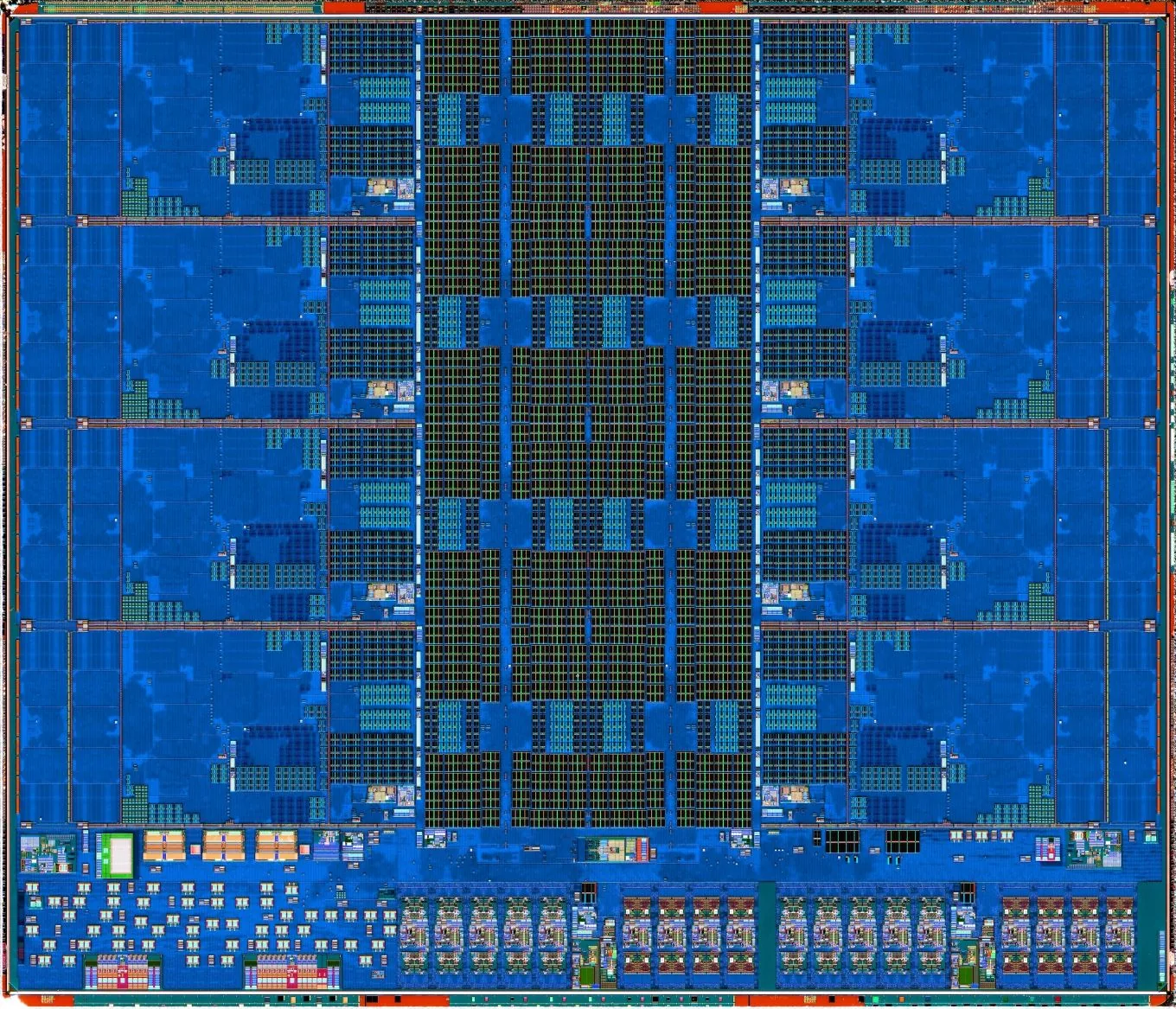
OpenAI reported that changes suggested by its AI models reduced the area of standard cells in two compute blocks of the Jalapeño accelerator. The warp engine area decreased by 13%, the matrix block by 10%; the results were verified on a fabricated die. The company's technical report was published on 18 November.
What was optimized in Jalapeño
Jalapeño — a specialized OpenAI chip for running AI models, developed jointly with Broadcom. In the warp engine, the models suggested changes to floating‑point adders and multipliers, data format conversions, reduction logic, and the special functions block. In the matrix block, arithmetic circuits and low‑precision dot‑product calculations were optimized.
The models altered the implementation of logic circuits and the distribution of operations across pipeline stages, and also identified opportunities to reuse hardware resources. For certain operations this yielded a noticeable effect: one multiplier after redesign occupied about 15% less area, and its latency dropped from two cycles to one. Another adder’s area also decreased by 15%, while its latency remained two‑cycle.
The percentages 13% and 10% refer to the standard cells of specific blocks, not to the entire crystal. They do not mean that Jalapeño as a whole became smaller by the same amount.
How AI participates in design
When working with AMD, OpenAI’s models analyze hardware schematics described in SystemVerilog and rewrite them at the RTL register‑transfer level—the code that defines the chip’s digital logic. Synopsys tools verify the correctness of the changes and assess the characteristics. This description pertains to the joint work with AMD; in the case of Jalapeño, OpenAI reported that it verified the changes on a finished die.
Separately, OpenAI and AMD used models to optimize blocks of future processors and graphics chips. According to OpenAI, in certain IP blocks the PPA metrics — power, performance, and area — were improved by up to 14%. AMD incorporated some of the suggested changes into a design sent to manufacturing. This does not mean that finished GPUs or CPUs with those changes are already on the market or that their overall performance increased by 14%.
OpenAI is also exploring the creation of processor cores from textual specifications and is developing, together with Synopsys, a specialized GPT‑Synopsys model for working with professional design and verification tools. The results of core creation still require engineering validation: the model may, for example, omit functions from the original design.
What this means for developers
For digital design engineers, the practical value of the approach lies in speeding up RTL exploration. The model can propose an alternative computation or pipeline structure, and then synthesis and verification allow comparison of options in terms of area, speed, and power consumption. However, the result must be evaluated beyond metrics: it is essential to confirm functional equivalence and ensure that the optimization has not eliminated required block capabilities.
OpenAI’s experience shows that AI can assist even in long‑optimized circuits, but it does not replace verification by specialists and EDA tools. For hardware developers it is a tool for exploring and evaluating implementations, not a way to automatically obtain a production‑ready chip.